My Role
Solo Product Designer
Timeline
Jan – May 2026
4 months
OUTCOME
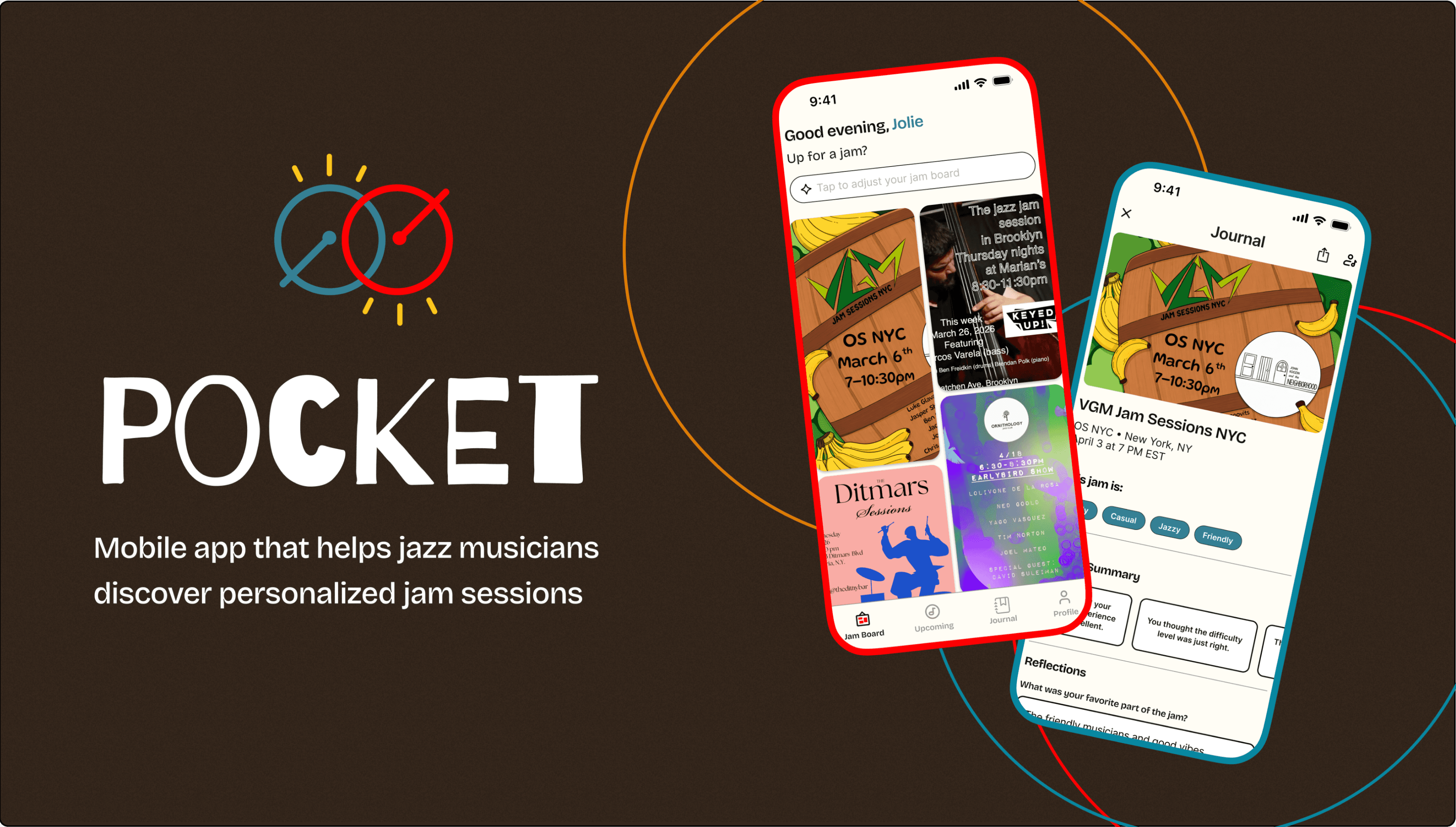
A prompt-based search companion
that allows musicians to find the jam
sessions that help them grow.
The Challenge
How do musicians find opportunities to play with others?
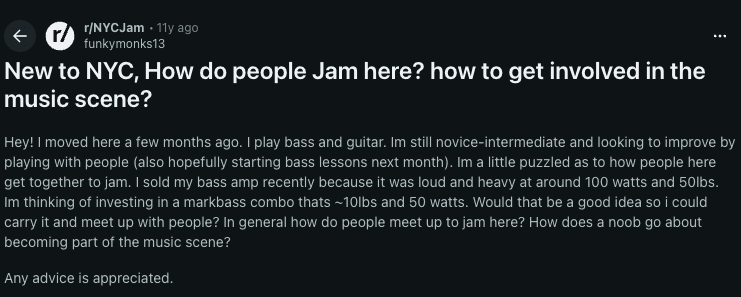
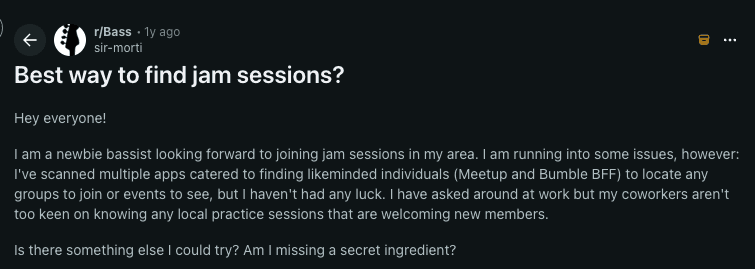
As a musician myself, I thought that getting into the music scene can feel difficult. Although there are lots of opportunities, it can be overwhelming to decide where to start looking.
The internet seems to agree with me:



Initial problem discovery
How might I help musicians find other musicians to get involved in the music scene?
Let’s Test thIs assumption
If we help musicians find each other, they can enter the music scene more easily.
To test this assumption, I interviewed eight advanced or professional musicians in their 20s and 30s, who play multiple genres. I interviewed six of them.
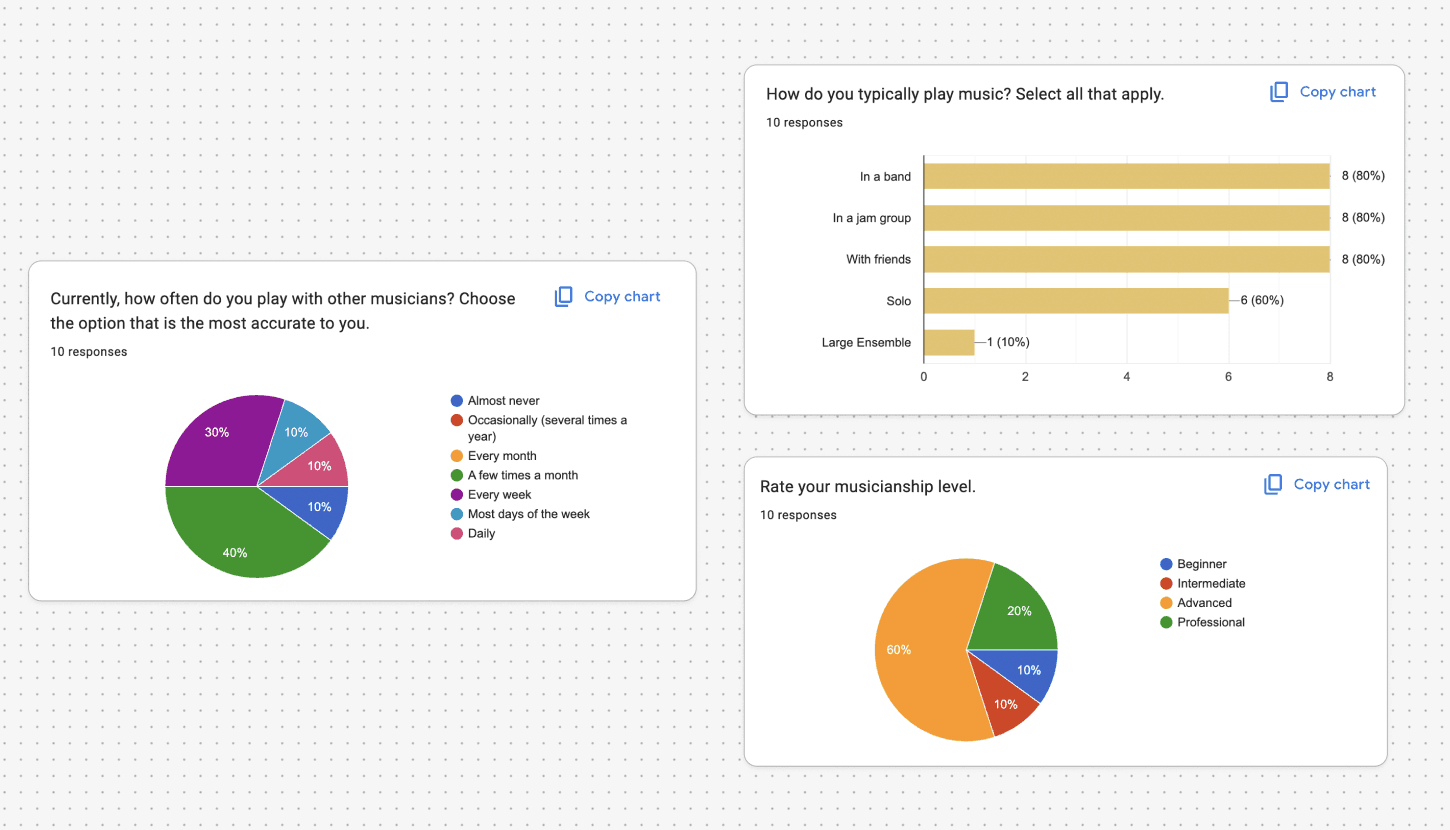
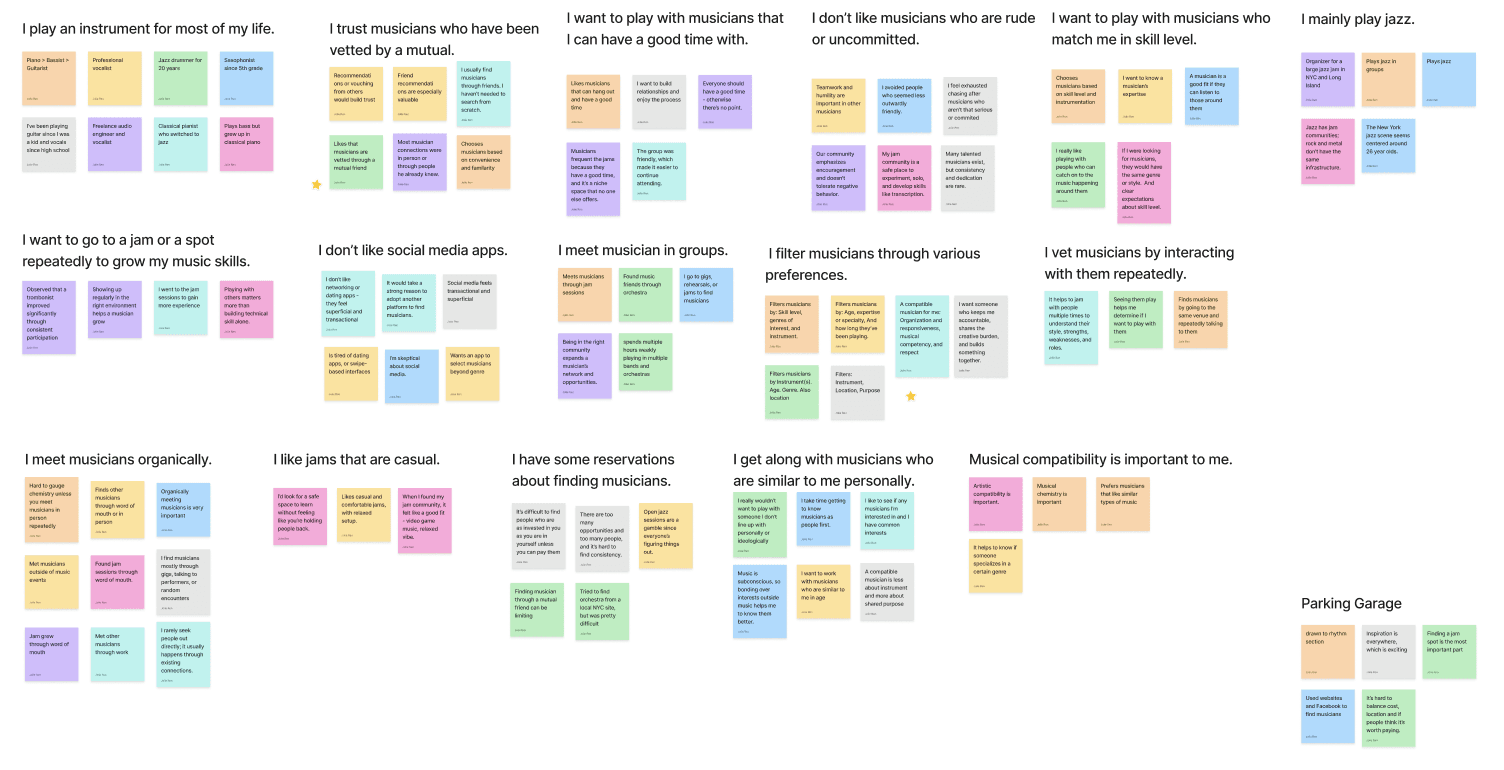
Survey results and affinity map that shows many insights from musicians
After the interviews, I realized that there is much more to musicianship than just entering the music scene! Here are the insights that pivoted my design direction:
#1. Musicians have a variety of personal goals.
“I really wouldn’t want to play with someone I don’t line up with personally or ideologically.”
Musicians attend jam sessions for different reasons, from improving their skills, to simply having a good time. However, a majority of the musicians I interviewed expressed that they look for musical compatibility and similar skill levels in other musicians.
#2. Jazz, more than any other genre, is reliant on communities.
“Jazz has jam communities, whereas I feel that other genres like rock and metal don’t have the same infrastructure.”
Improvisation, a unique component of jazz, relies on other musicians. This meant that I narrowed my design focus to jazz jam sessions.
#3. In-person connection is essential to vetting.
“You go to the same jam, repeatedly talk to the same people, and then you figure out ways to expand outside of the jam.”
Almost every musician I interviewed expressed unsatisfying experiences with finding other musicians digitally. However, they emphasized the importance of finding places to meet musicians in person. Rather than matching musician to musician, I shifted my design focus to match musician to jam session.
rewriting the problem
From these insights, I refined the initial HMW statement to reflect user needs more accurately. In the original problem statement, I scrapped the words that didn’t align with insights taken from user interviews:
How might I help musicians find other musicians to get involved in the music scene?
And now, the challenge lies in:
How might I help jazz musicians discover jam sessions that align with their personal goals?
Notable iterations that informed my final design
Clarified Information for the Jam Board
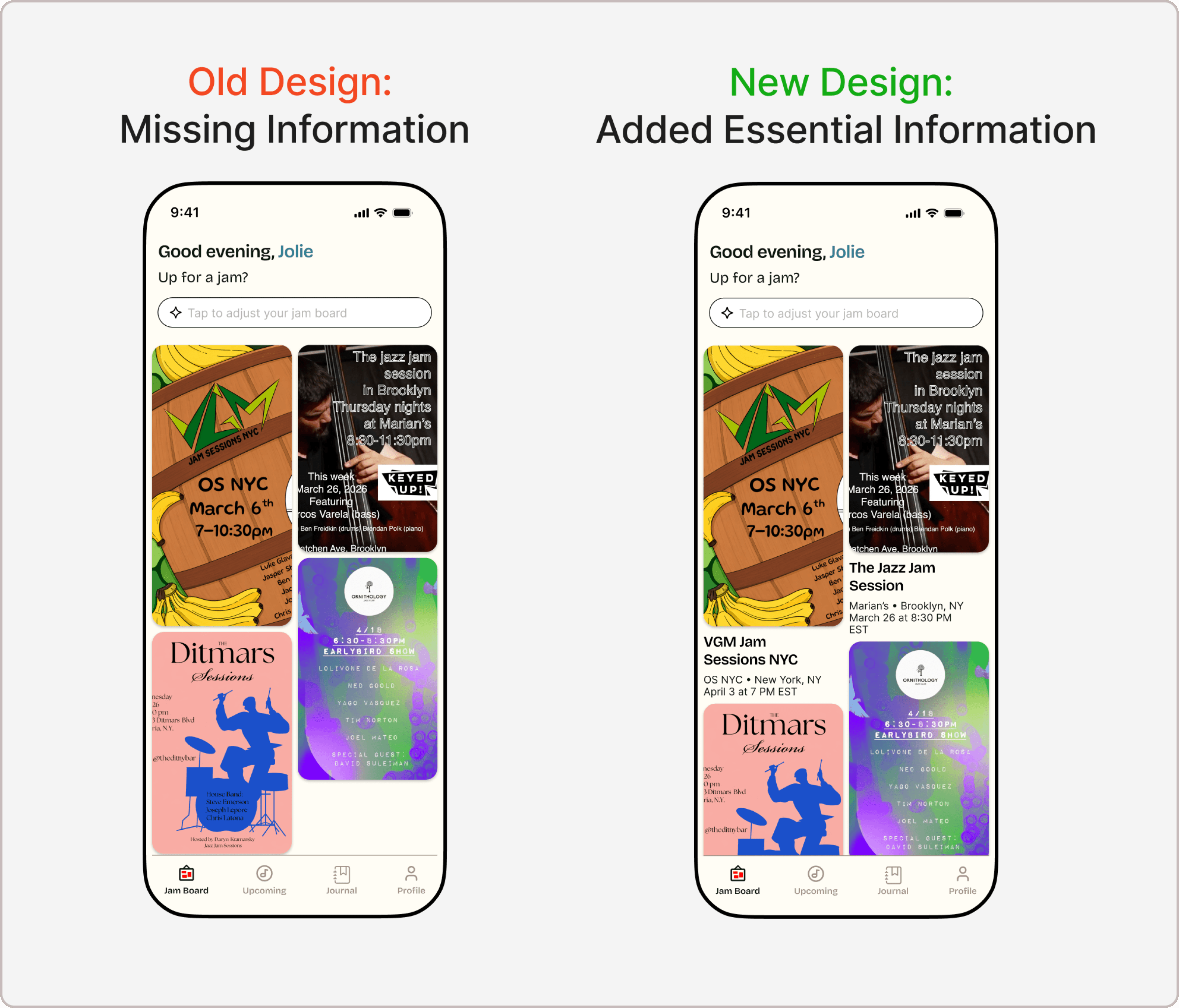
While coming up with the designs, one important feature I created is an adaptive Jam Board that responds to a user’s preferences. However, testers couldn't identify sessions from flyer images alone, so I overlaid each card with the session name, venue, location, and date/time.
Revised post-confirmation flow
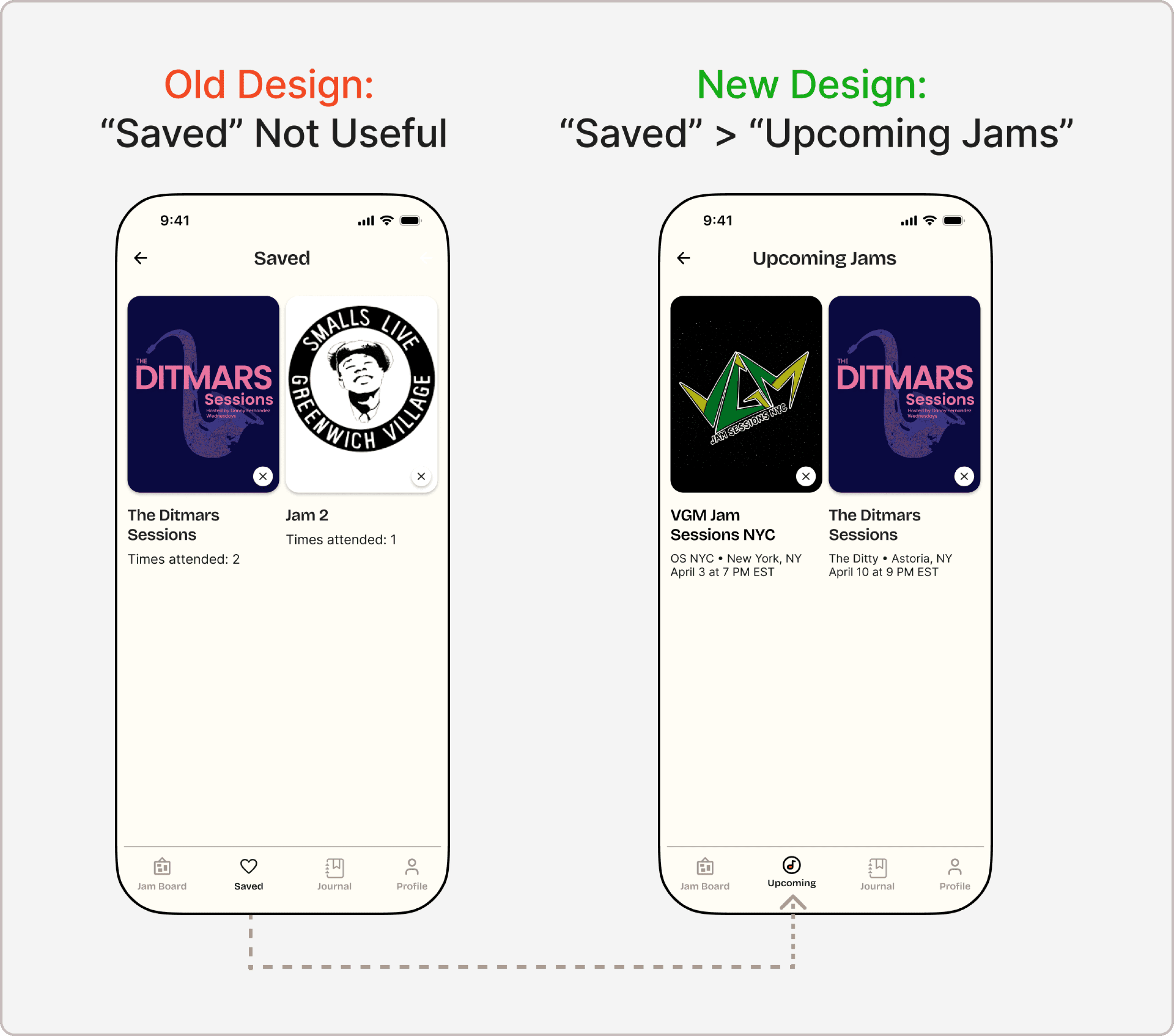
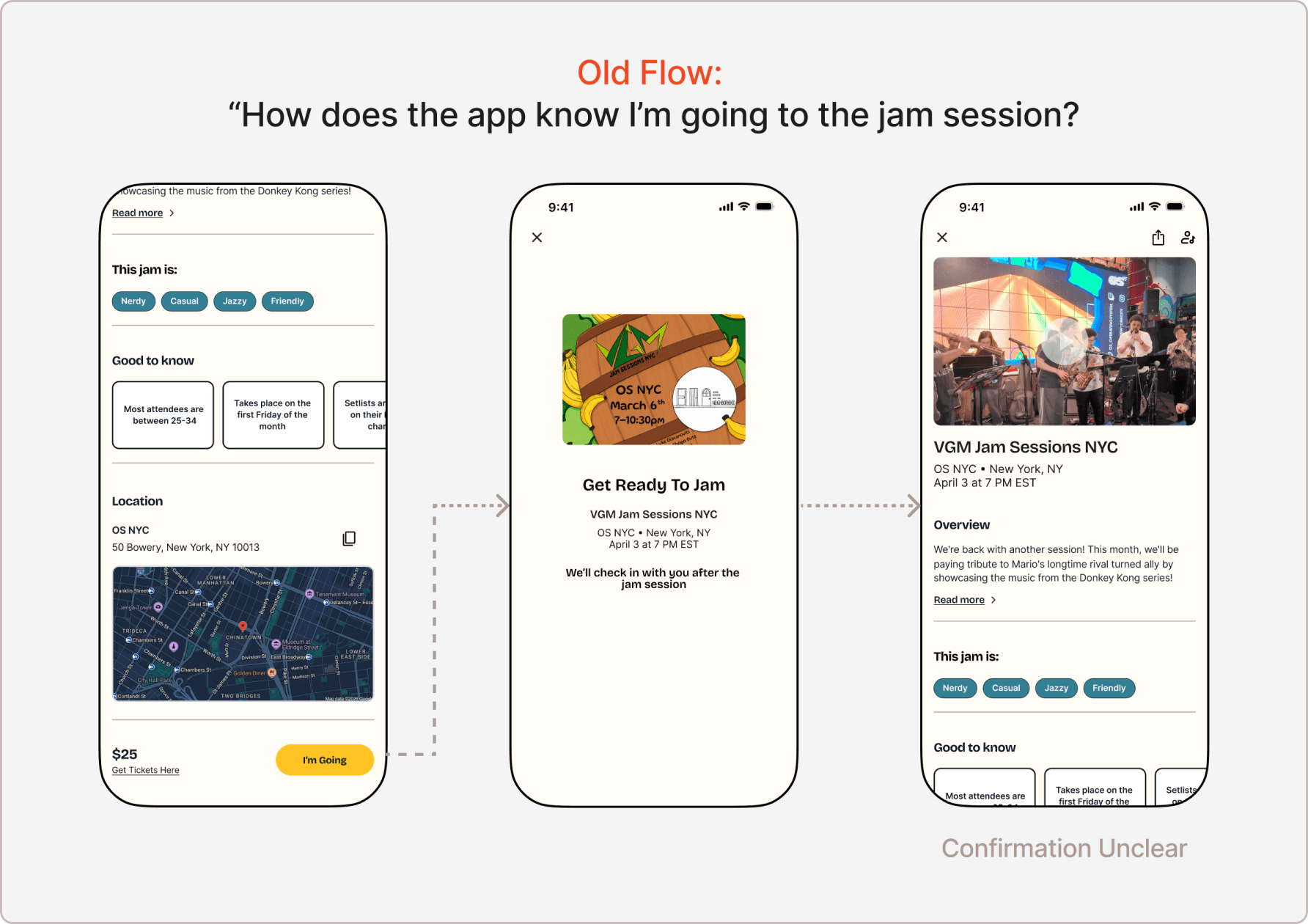
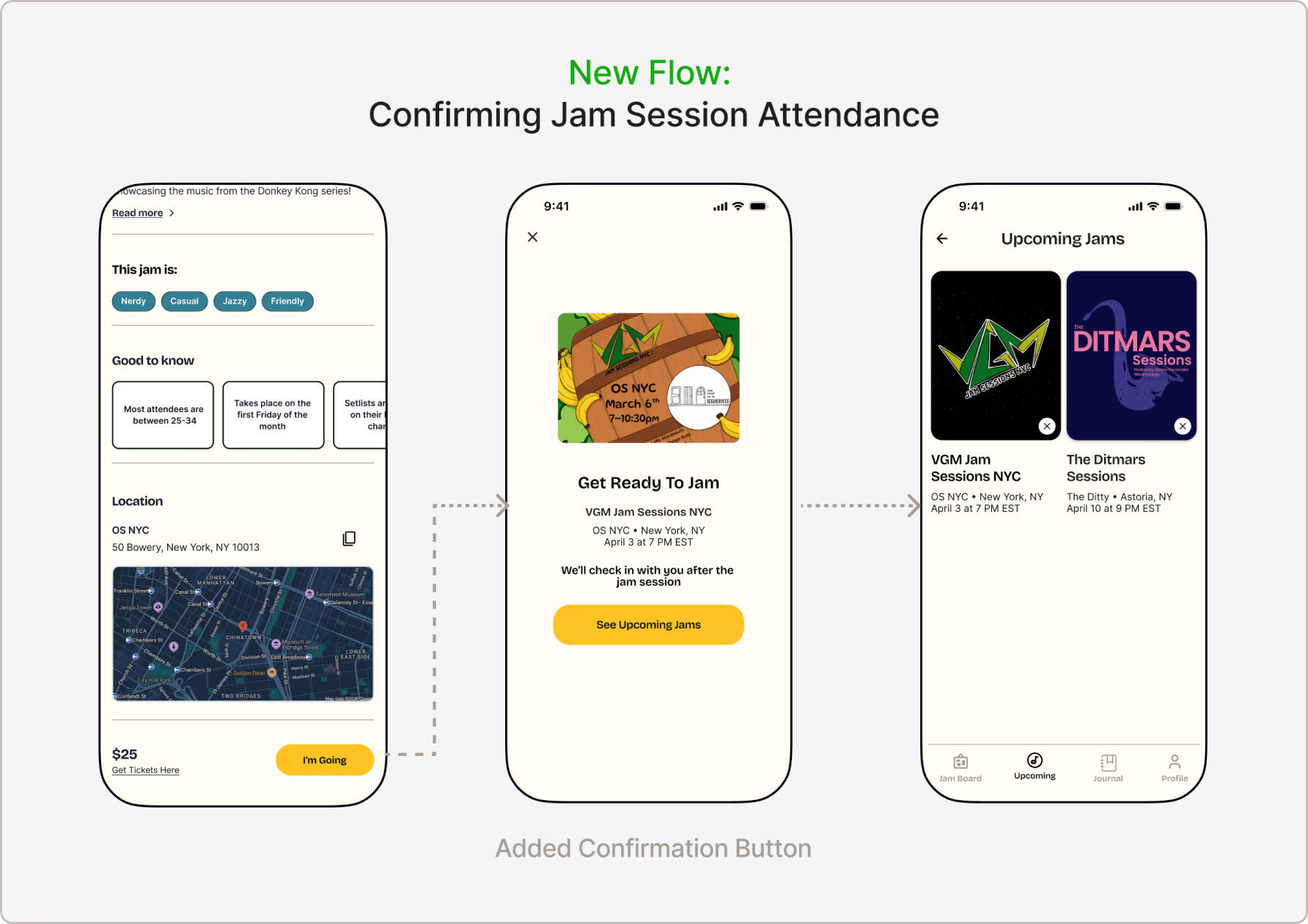
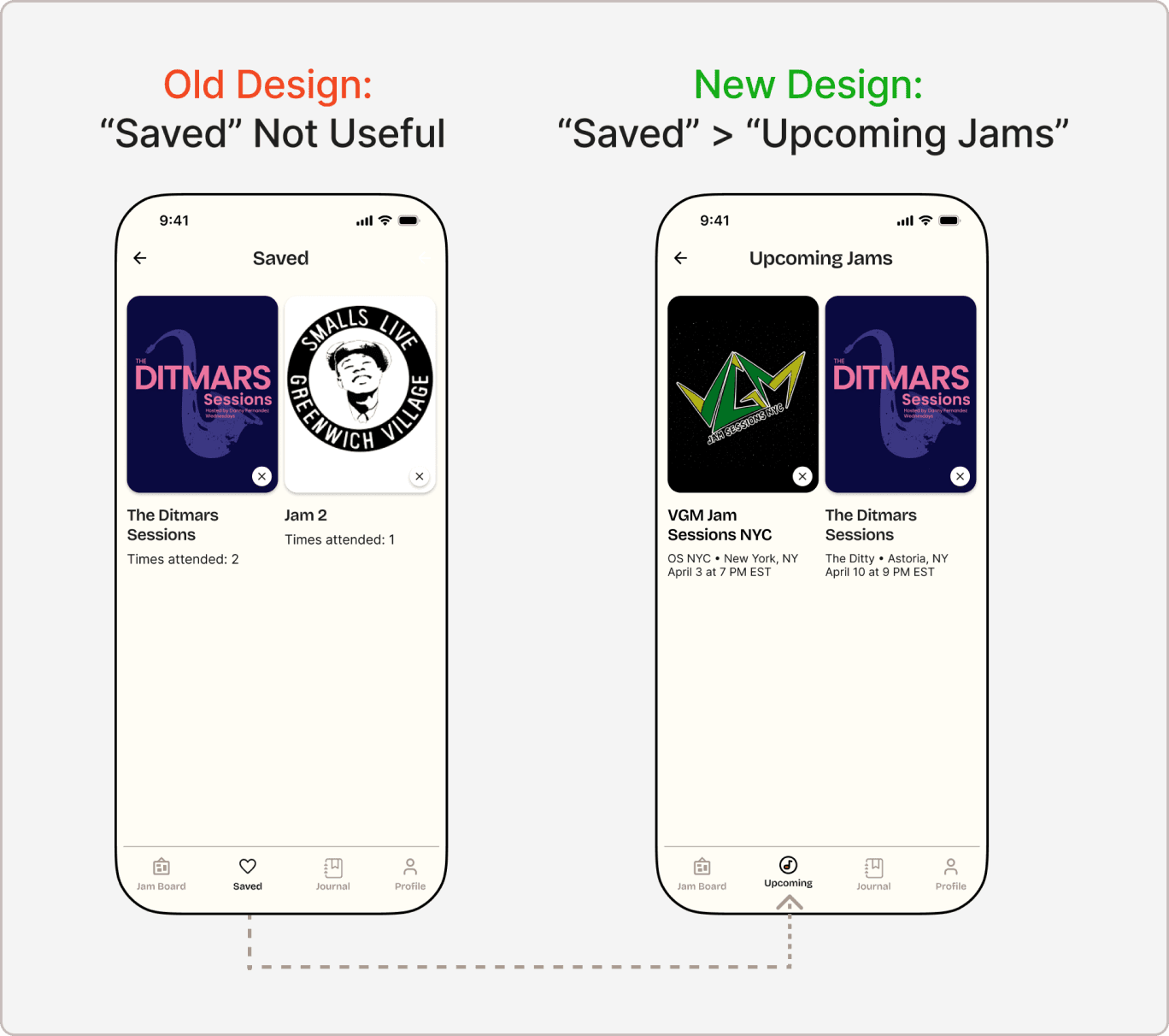
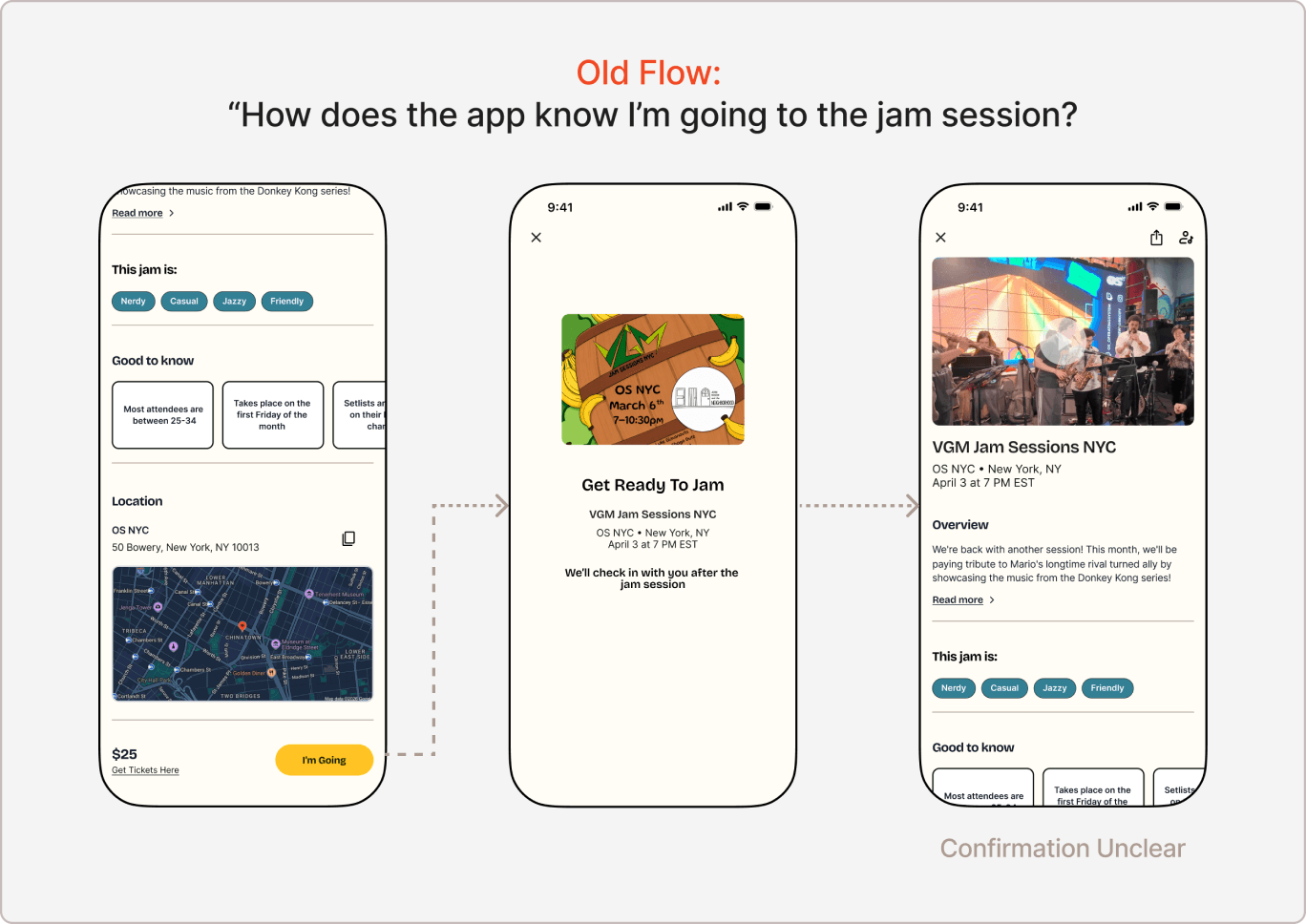
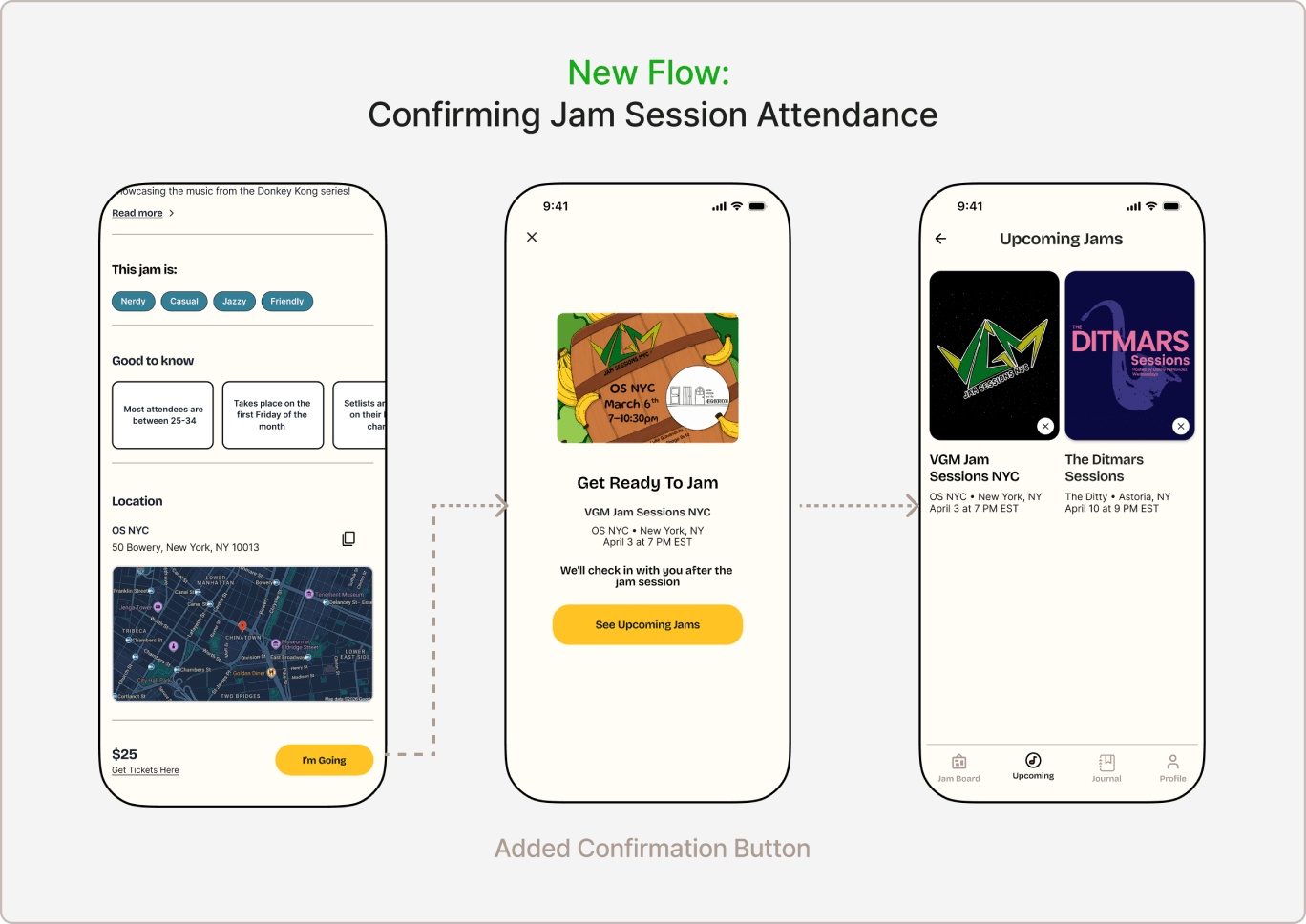
Users who tested the designs felt that the “Saved” and “Journal” tabs were redundant. Additionally, users were unsure how the app knew that they were attending a jam session. This was an opportunity to solve two problems for one flow.
Instead of having a "Saved" tab to store liked jams, I rebuilt the page to display "Upcoming Jams”.
Then, I routed users directly to the “Upcoming Jams” tab to made the confirmation feel meaningful and functional.
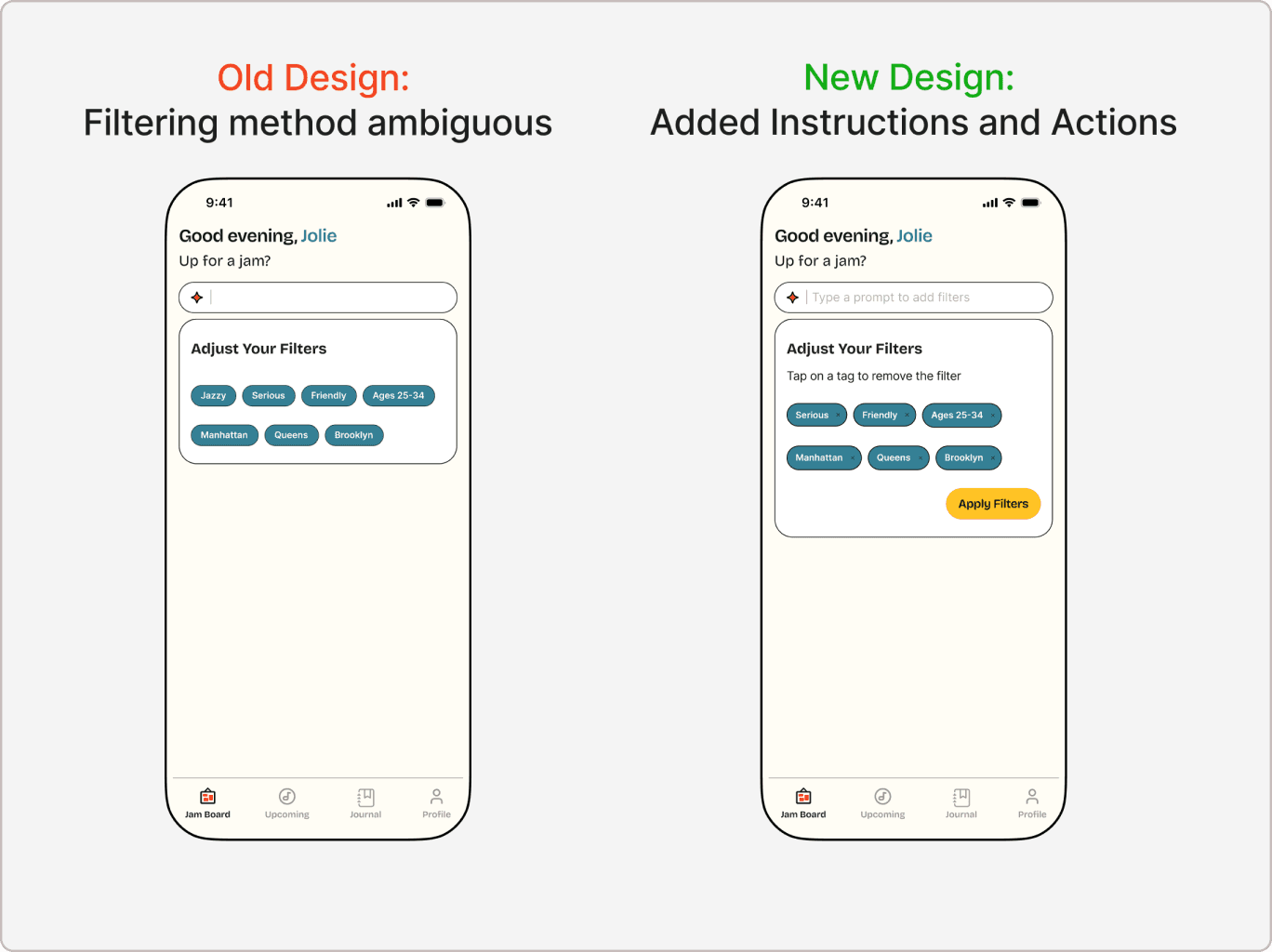
Improved feedback to search and filter
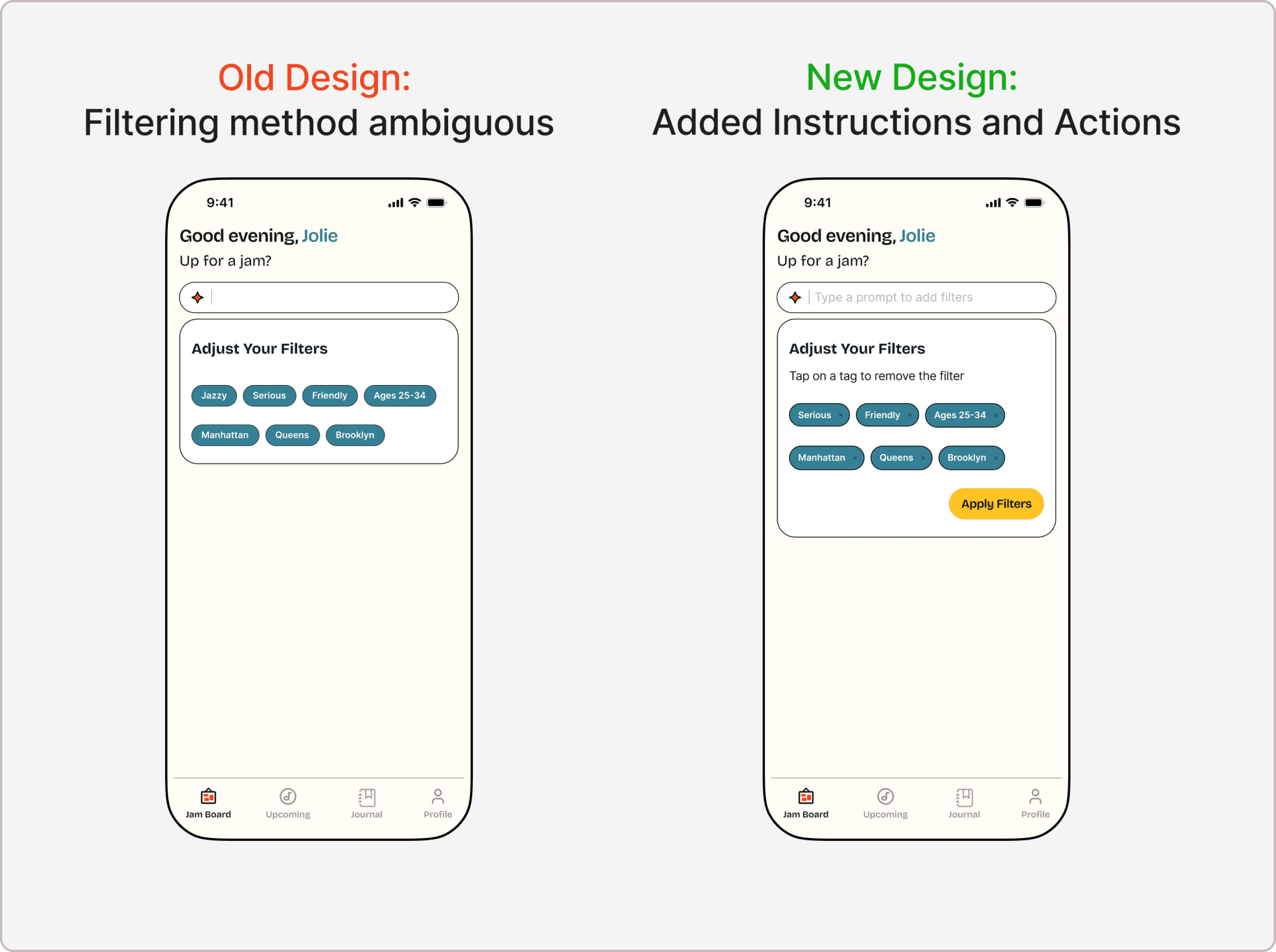
From testing, I refined the prompt-based filters by adding placeholder text, remove buttons for each tag, and an "Apply Filters" button so that users know their filters were applied.
3, 2, 1, Let’s Jam...
...The Final Designs!
01 Onboarding
Tell Pocket about yourself so it can find jams that are unique to you, such as jam preferences, goals, and interests.
02 Choosing a Jam Session
An adaptive bulletin board surfacing jam sessions tailored from onboarding questions. Edit filters with prompt-based search and select your jam session.
03 Recording and Reflection
After the jam session, answer questions that shuffles your Jam Board for better recommendations. Keep track of musicians, add media, and record your overall experience in your journal.
future considerations
Collaborative Features
It would be amiss not to take advantage of the lively jazz scene, and if I had more time, I would design features for community-building. These features would include allowing users to share their journals, or see who’s going to the jam session.
reflections
Lessons For Moving Forward
A Pleasantly Surprising Pivot
The biggest takeaway from this project was that I pivoted my HMW statement to accurately reflect what users needed. This was crucial in driving my design direction, and cemented the importance of improvisation and openness in my design practice.
Exercising Sound Judgement in a Short Time Window
As the solo designer for this project, there were many features I could have included if I had unlimited time. However, I kept returning to quotes given by the users in the research and testing phases to dive deep into flows and features that addressed their core pain points.
Connect
my Role
Solo Product Designer
Timeline
Jan – May 2026
4 months
OUTCOME
A prompt-based search companion
that allows musicians to find the jam
sessions that help them grow.
The Challenge
How do musicians find opportunities to play with others?
As a musician myself, I thought that getting into the music scene can feel difficult. Although there are lots of opportunities, it can be overwhelming to decide where to start looking.
The internet seems to agree with me:
Initial problem discovery
How might I help musicians find other musicians to get involved in the music scene?
Let’s Test thIs assumption
If we help musicians find each other, they can enter the music scene more easily.
To test this assumption, I interviewed eight advanced or professional musicians in their 20s and 30s, who play multiple genres. I interviewed six of them.
Survey results and affinity map that shows many insights from musicians
After the interviews, I realized that there is much more to musicianship than just entering the music scene! Here are the insights that pivoted my design direction:
#1. Musicians have a variety of personal goals.
“I really wouldn’t want to play with someone I don’t line up with personally or ideologically.”
Musicians attend jam sessions for different reasons, from improving their skills, to simply having a good time. However, a majority of the musicians I interviewed expressed that they look for musical compatibility and similar skill levels in other musicians.
#2. Jazz, more than any other genre, is reliant on communities.
“Jazz has jam communities, whereas I feel that other genres like rock and metal don’t have the same infrastructure.”
Improvisation, a unique component of jazz, relies on other musicians. This meant that I narrowed my design focus to jazz jam sessions.
#3. In-person connection is essential to vetting.
“You go to the same jam, repeatedly talk to the same people, and then you figure out ways to expand outside of the jam.”
Almost every musician I interviewed expressed unsatisfying experiences with finding other musicians digitally. However, they emphasized the importance of finding places to meet musicians in person. Rather than matching musician to musician, I shifted my design focus to match musician to jam session.
rewriting the problem
From these insights, I refined the initial HMW statement to reflect user needs more accurately. In the original problem statement, I scrapped the words that didn’t align with insights taken from user interviews:
How might I help musicians find other musicians to get involved in the music scene?
And now, the challenge lies in:
How might I help jazz musicians discover jam sessions that align with their personal goals?
Notable iterations that informed my final design
Clarified Information for the Jam Board
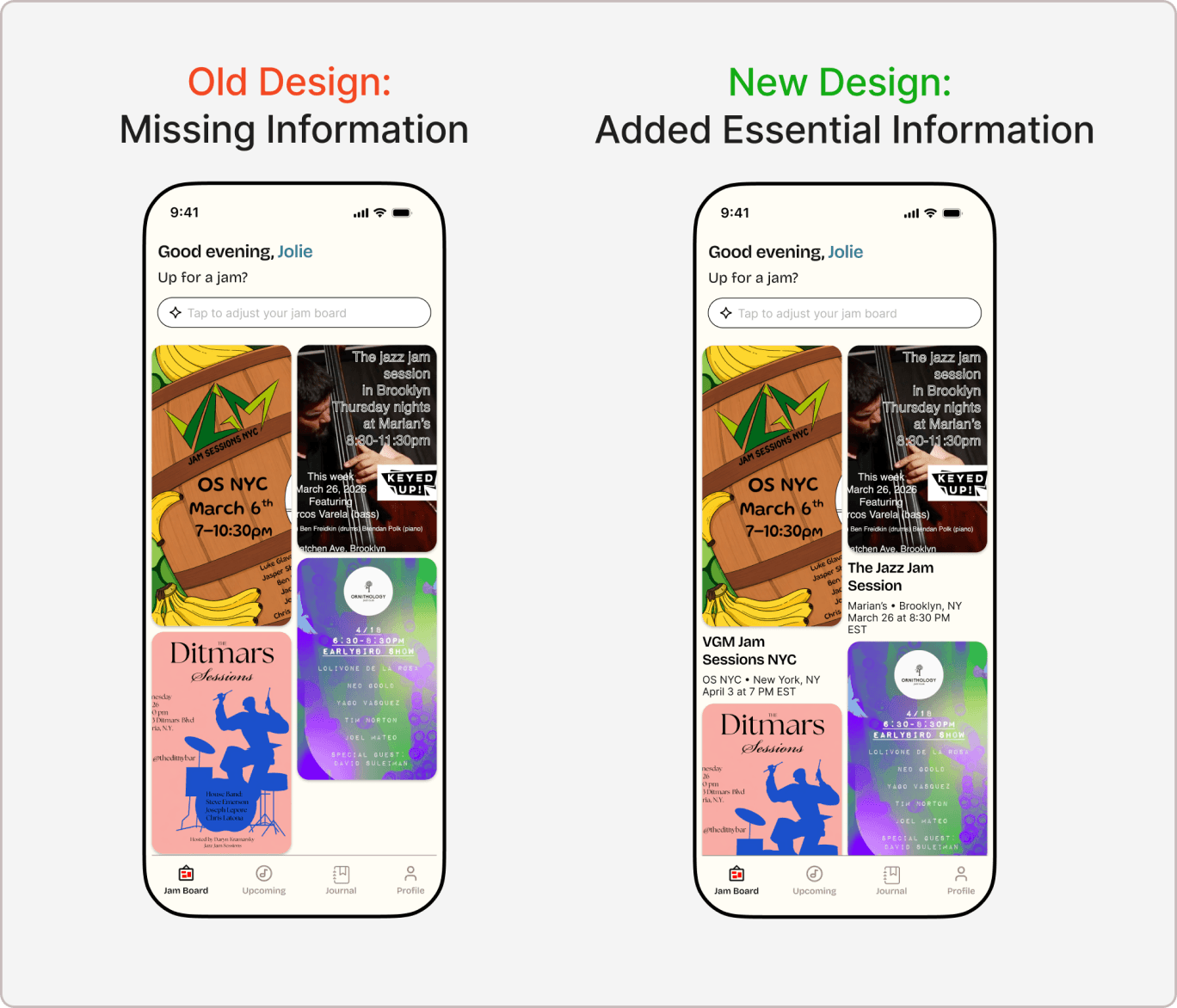
While coming up with the designs, one important feature I created is an adaptive Jam Board that responds to a user’s preferences. However, testers couldn't identify sessions from flyer images alone, so I overlaid each card with the session name, venue, location, and date/time.
Revised post-confirmation flow
Users who tested the designs felt that the “Saved” and “Journal” tabs were redundant. Additionally, users were unsure how the app knew that they were attending a jam session. This was an opportunity to solve two problems for one flow.
Instead of having a "Saved" tab to store liked jams, I rebuilt the page to display "Upcoming Jams”.
Then, I routed users directly to the “Upcoming Jams” tab to made the confirmation feel meaningful and functional.
Improved feedback to search and filter
From testing, I refined the prompt-based filters by adding placeholder text, remove buttons for each tag, and an "Apply Filters" button so that users know their filters were applied.
3, 2, 1, Let’s Jam...
...The Final Designs!
01 Onboarding
Tell Pocket about yourself so it can find jams that are unique to you, such as jam preferences, goals, and interests.
02 Choosing a Jam Session
An adaptive bulletin board surfacing jam sessions tailored from onboarding questions. Edit filters with prompt-based search and select your jam session.
03 Recording and Reflection
After the jam session, answer questions that shuffles your Jam Board for better recommendations. Keep track of musicians, add media, and record your overall experience in your journal.
future considerations
Collaborative Features
It would be amiss not to take advantage of the lively jazz scene, and if I had more time, I would design features for community-building. These features would include allowing users to share their journals, or see who’s going to the jam session.
reflections
Lessons For Moving Forward
A Pleasantly Surprising Pivot
The biggest takeaway from this project was that my initial assumption did not accurately reflect what users needed. This pivot was crucial in driving my design direction, and cemented the importance of improvisation and openness in my design practice.
Exercising Sound Judgement in a Short Time Window
As the solo designer for this project, there were many features I could have included if I had unlimited time. However, I kept returning to quotes given by the users in the research and testing phases to dive deep into flows and features that addressed their core pain points.